Navajo Sterling Silver and Turquoise Hand Pendant

horsekeeping LLCHome | BooksArticles | Shopping | View Cart | Contact | Site Map | Search

Ervin Hoskie - Navajo Sterling Silver
Turquoise Hand Pendant
HK Item #NP239

Shopping  <   Native American Jewelry  <  Pendants

Native American Navajo Sterling Silver  turquoise hand Pendant

Native American Navajo Sterling Silver  turquoise hand Pendant

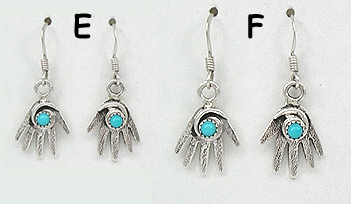
Wire earrings.

Native American Navajo Sterling Silver  turquoise hand Pendant

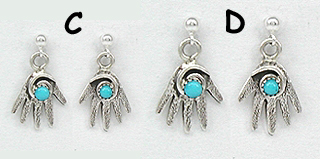
Post earrings.

Native American Navajo Sterling Silver  turquoise hand Pendant

Dime above shows scale of pendant.

See More Pendants

See More Earrings

See More Sets

Wonderful sterling silver sand cast hand
with clear turquoise cabochon, silver dust texture and overlay whirligig.
Pendant Only with Chain
1 1/8" long with bail by 5/8" wide
Hallmark: Sterling
NP239A - $30 plus s/h
Pendant with Chain
and Wire Earrings
NP239B - $65 plus s/h
Pendant with Chain
and Post Earrings
NP239C
- $65
plus s/h
Wire Earrings Only
1" long including earwire
NP239D - $39 plus s/h
Post Earrings Only
3/4" long
NP239E - $39 plus s/h

View your  horsekeeping Videos and Books shopping cart.

Native American Navajo Sterling Silver  turquoise hand Pendant

Comes with 18" sterling silver chain as shown.
Large swinging bail lets you wear this pendant with a chain, collar or cable.


See Native American JewelrySee Chains, Cables, Beads


Return Policy


The Hand.

In Native American art, the hand usually represents the presence of man. From the earliest hand imprints on cave walls, the hand depicts a man's work, achievements and his personal history.

When a hand had a swirl in the middle of it, that is said to be the "eye in hand" and represents a mystic, or all-seeing, hand, the presence of the Great Spirit in man.

A Native American's horse was highly honored and often covered in symbols for various purposes. This would vary from tribe to tribe but hand prints were often used in various positions on a horse to mean different things.

The most prized handprint was when preparing for battle, if it was a kill-or-be-killed mission, an upside-down hand would be placed on the warrior's horse.

If a horse knocked down an enemy, right and left hand prints were put on the horse's chest.

The Pat Hand Print was the left hand pressed onto the horse's right hindquarters. It was put on a horse who had returned from a dangerous mission with his master unharmed.


©  2010 Cherry Hill   © Copyright Information


Home | Books
Articles | Shopping | View Cart | Contact | Site Map | Search

©  2009 Cherry Hill   © Copyright Information