Vintage jewelry often features beautiful green gemstones, many of which can appear similar at first glance. This guide explains the most common green stones found in Mexican, Southwestern, and Native American–style jewelry, and how to tell them apart.
Green turquoise is one of the most frequently used stones in vintage Mexican and Southwestern jewelry. Its color ranges from pale mint green to deeper blue-green, depending on the mine and mineral content.
How to identify it:
• Usually opaque
• Often shows matrix (veining or webbing)
• Surface has a
slightly waxy or matte look
• Common in Mexican sterling
silver jewelry
Many turquoise stones are stabilized to improve durability and color.
Chrysoprase is a variety of chalcedony prized for its bright apple-green color, caused by trace amounts of nickel.
How to identify
it:
• Color is typically clear, fresh green
• Often slightly translucent (light may glow through edges)
• Smooth, glassy polish
• Usually no matrix
Chrysoprase was popular in mid-century Mexican silver jewelry and remains highly collectible.
Variscite is a phosphate mineral that can closely resemble turquoise but tends to have a softer, more subdued appearance.
How to identify it:
• Light to medium green color
• Often opaque
• May show veining or cloudy patterns
• Slightly softer
and more chalky-looking than turquoise
Variscite is less common than turquoise but is occasionally found in Southwestern jewelry.
Gaspeite is a nickel carbonate mineral known for its bright apple-green to yellow-green color. It is less common than turquoise but has become increasingly popular in Southwestern and contemporary Native American jewelry.
Originally discovered in Canada, gaspeite is now most often associated with Australian deposits, and is frequently used by modern silversmiths for its vivid, eye-catching color.
How to identify it:
• Color ranges from bright apple green to neon yellow-green
• Usually opaque
• May show brown matrix or webbing
• Color can appear more intense or “electric” than turquoise
• Surface is typically matte to slightly waxy
Gaspeite is sometimes confused with chrysoprase or variscite, but it is generally more opaque than chrysoprase and brighter in color than variscite.
Green onyx is typically dyed chalcedony rather than a natural green stone. It was widely used in mid-20th century jewelry for its uniform color.
How to identify it:
• Deep, even green color
• Often slightly translucent
• No matrix or variation
• Color can appear somewhat artificial
or overly consistent
Jade is a durable gemstone prized in many cultures. It is less common in Mexican silver bracelets but may appear in some vintage pieces.
How to identify
it:
• Smooth, slightly waxy luster
• Can be
translucent to opaque
• Typically feels dense and
heavy
• Color ranges from pale to deep green
| Stone | Transparency | Matrix | Color Style |
|---|---|---|---|
| Turquoise | Opaque | Often present | Blue-green to green |
| Chrysoprase | Slightly translucent | None | Bright apple green |
| Variscite | Opaque | Sometimes | Soft green |
| Green Onyx | Translucent | None | Uniform dark green |
| Jade | Variable | None | Natural green range |
Correctly identifying green stones helps collectors understand value, origin, and craftsmanship. Natural stones such as turquoise and chrysoprase are generally more desirable than dyed or simulated materials, while each stone contributes its own history and aesthetic appeal.
At Horsekeeping, we carefully evaluate each piece based on stone characteristics, craftsmanship, and historical context to provide accurate and trustworthy descriptions.
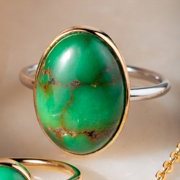 Green Turquoise Opaque • Often matrix • Blue-green tone | 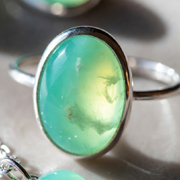 Chrysoprase Slightly translucent • Even color • Apple green | 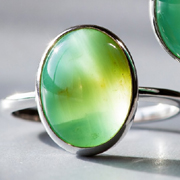 Variscite Opaque • Softer green • Often webbing |
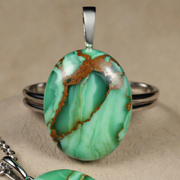 Gaspeite Bright neon green • Opaque • Often matrix | 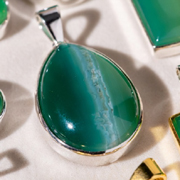 Green Onyx Uniform color • Translucent • Dyed stone | 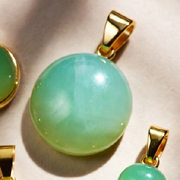 Jade Waxy luster • Dense • Natural variation |
Read about turquoise that is used in jewelry.
See
Native American Indian turquoise jewelry item for sale on our
NEW
ITEMS page and SHOPPING
page.
Home | FAQ | About Us | Articles | Shopping | Contact | Site Map | Search
© 2026 Horsekeeping LLC © Copyright Information

