

|
Ceremonial
Peyote Fan |


|
|
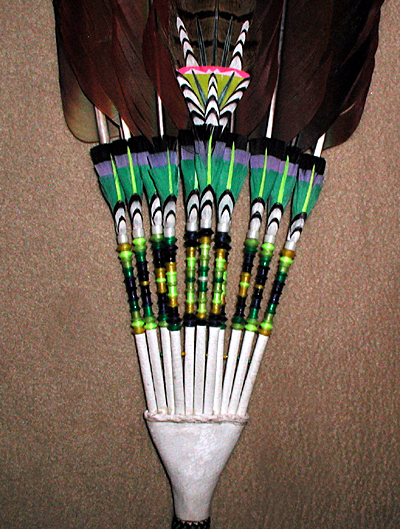
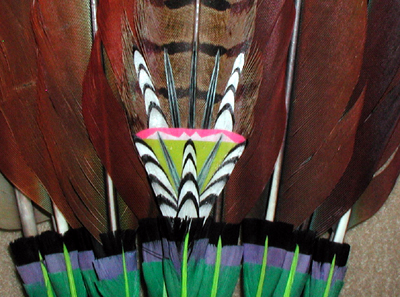
Ceremonial Peyote Fan
CF88 - $1,200 | ||||||
|
Paula says - "In the Native American Church peyote ceremony, the peyote fan is held by the Roadman to represent the Great Spirit. It is then passed around to each of the participants in the meeting. Many attendees also have their own personal fans."
Peyote stitch beaded handle with 6" fringe.
|
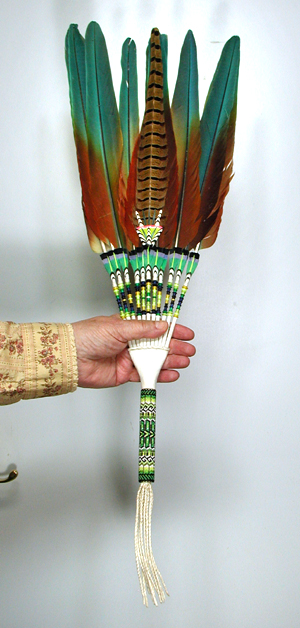
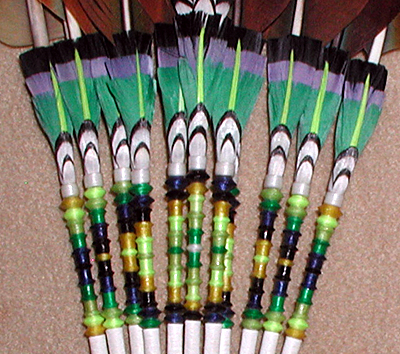
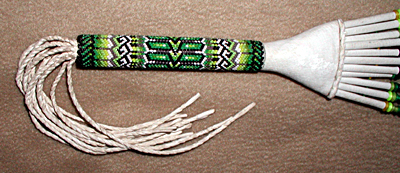
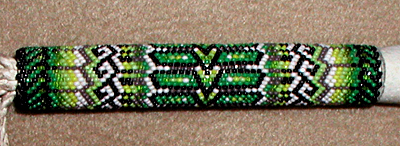
Peyote StitchThe peyote stitch, also known as the gourd stitch, is an off-loom bead weaving technique that creates a tightly woven, colorful covering around cylindrical objects such as staffs, sticks and rattle handles. It involves weaving beads in a zig-zag or staggered pattern, where each new bead is sewn between beads of the previous row, creating an offset, textured surface that resembles the segmented appearance of the peyote cactus, from which the stitch gets its name. Peyote stitch pieces can be woven as flat strips, in a flat round shape, or as a tube. The colors and designs are often used to represent personal or tribal identity, tell stories, or convey symbolic messages. Each pattern can be unique to a particular tribe, family, or individual, with motifs reflecting cultural heritage, spiritual beliefs, or important life events. |
Home | FAQ | About Us | Articles | Shopping | Contact | Site Map | Search
© 2025 Horsekeeping LLC © Copyright Information