Hello there!
And welcome to Adventures in Fiction Writing - 3
This is the third in a series about the state of fiction writing today along with updates on my debut novel, Becoming Amber, which will be released later this year.
My first newsletter covered the love of writing; the second the importance of a good idea.
Now it's time to write. Right?
Well, yes and no.
Every writer has their own way of getting from idea to print.
I'll tell you how the process of writing my debut novel, Becoming Amber, went for me but your path might be completely different.
Research
First, I dug out all the material I saved from my time in Alaska - photos, letters, maps, diaries - to remind me what things were like in that time and place.
Then, I assembled reference materials. The Milepost, for one, which is a mile-by-mile travel guide for the trip through western Canada and Alaska. On the shelves in my scriptorium are books I've gathered over the years on that contain valuable information on wolves, bears, moose, plants, and weather.
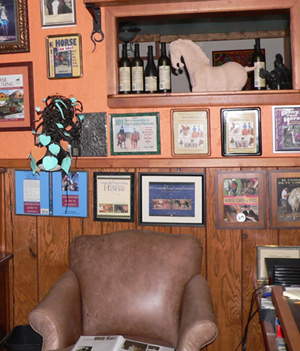
I sat in "Billy" my plush leather chair, closed my eyes, and went back to 1967. With a rough plan in my head, I handed the reins over to my characters.
The Writing
I don't know about other authors, but I am just a scribe.
Once I cut the characters loose, I had a hard time keeping up with their narration and dialogue. All I did was type. For a full year. As they told the story.
One of my readers recently asked me this:
"Do you write every day, Cherry? How long?"
B. B.Hi B. B.,
I have an office separate from my home where I write at least four days a week, 7-9 hours per day.
Cherry
So there I was all that first year, just transcribing the story as the characters narrated.
At the end of that first pass I went, "Whoa! 135,000 words. That's a long book!"
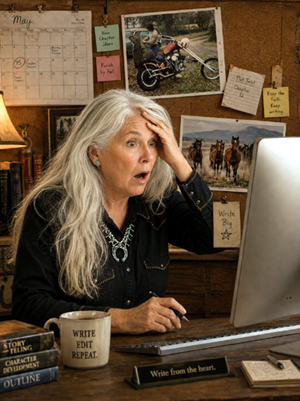
Since Becoming Amber could be considered an adventure story, I researched book lengths and found this:
Adventure novels range in length from 70,000 to 100,000 words with 96,000 words being the sweet spot.
Write-Edit-Rewrite
OK, Cherry, get out the paring knife - chain saw, more likely.
I was in for nearly another year of write-edit-rewrite.
As I did, the story got tighter and more focused and I got rid of a lot of unnecessary words. Yet there were certain passages I was not willing to part with.
Laughing as I honed, I thought of the line from the movie Amadeus where the pompous Emperor Joseph II commented on one of Wolfgang Amadeus Mozart's operas by saying ". . . there are simply too many notes." Like Mozart, I kept only the notes I felt were essential to my work.
By the end of that second year, I had a book that was under 100,000 words and had passed the scrutiny of MMTR (My Most Trusted Reader), husband Richard.
Spouse as Reader
It is almost universally recommended to NOT have your spouse read and comment on your writing. Why? It could cause friction in your relationship if the spouse points out weaknesses in the story or suggests removing a part the author is in love with. Or the spouse doesn't "get it" or is not qualified to be an editor. Why was I not worried? The answer could be a book in itself, but I'll be brief:
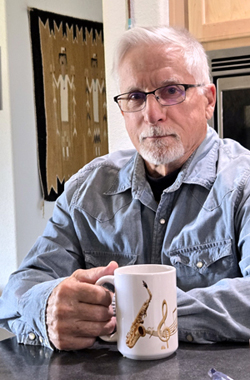
- Richard had an old-school Catholic school education followed by college, making him not only qualified but picky!
- He had been the first and last to read every horse book manuscript that I wrote before it headed to the publisher.
- He is an avid fiction reader (whereas, I have not read a novel since college.)
- But, most importantly, Richard and I have a long, strong relationship, one that allows us to shoot from the hip, laugh, and then get on with what needs to be done.
So, by the end of the second year, I felt I had a manuscript that was ready to publish.
Boy was I in for a surprise. See the next newsletter for the shocking state of fiction publishing today.
Until then,