| Catlinite
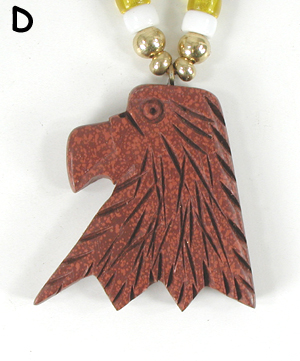
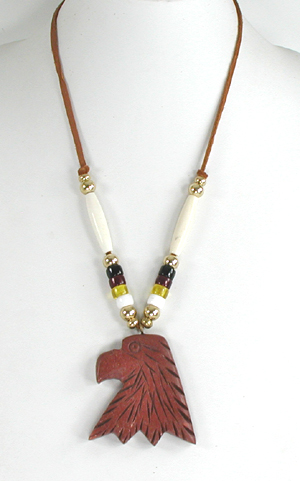
Eagle Necklace NC429 - $95 each plus s/h | |||||||
Paula says - "Eagle is made from sacred pipestone (catlinite) that is quarried by the artist. The necklace is made of soft deerskin with high quality glass crow beads and brass beads. "Pendant is carved on both sides so it can be worn to face either way."
Bead
of the Four Sacred Colors.
| ||||||||
About Alan Monroe - LakotaAlan Monroe creates his Northern Plains artwork from hides, stone, leather, and wood. He learned the basics of quill working, weaponry, sculpting and pipe making from traditional and contemporary artisans in his family circle. He is a fifth generation pipe maker and considered by many to be a master pipe maker. In his sculptures, Monroe works with a variety of materials such as pipestone, bone, wood and alabaster. He creates small objects like fetishes to large pieces than can weigh hundreds of pounds. Al Monroe's work can be seen in many galleries and museums across the country and he has won many awards. Al Monroe was born in Hot Springs , South Dakota and is an enrolled member of the Oglala Sioux Tribe. He graduated from Hot Springs High School and studied business and art in Nebraska, Tennessee, and South Dakota. | ||||||||
Native American Eagle SymbolismEagle is a symbol of power, healing and wisdom. Eagle represents enlightenment reached through inner work, understanding and reclaiming our personal power. Tenacity, clear vision and patience, living in balance with Spirit and Earth. Eagle connects one with Great Spirit, the Great Mystery, opening the soul to greater healing. Eagle tells you that the universe is giving you the opportunity to fly above your life's worldly levels, or above the shadow of past realities, granting yourself permission to be free in order to reach all the joy that your heart desires and Spirit requires. | ||||||||
FOUR SACRED COLORSMany Native Americans view the world as having four directions. Each direction has a special meaning and color associated with it. The Lakota use the colors black, red, yellow and white to represent the four directions. For some, the colors represent the four seasons and the changes we make on our journey through life. Every tribe and every person has their own beliefs and you should use what best represents what you believe. Read more about Four Colors Medicine Wheel. |
About PipestonePipestone, also known as catlinite, is a form of clay called argillite with a high iron content that colors it a deep red to pale orange. Pipestone was discovered in southwestern Minnesota by the Sioux Indians, who consider it a sacred material and use it to carve pipes and other ceremonial objects. It is easy to carve because of its lack of quartz. Read about stones The quarries located at Pipestone National Monument are considered sacred to many Native American people. Read more about Sacred Red Pipestone from Minnesota. |
Home | FAQ | About Us | Articles | Shopping | Contact | Site Map | Search
© 2025 Horsekeeping LLC © Copyright Information