Steven
Sockyma, Hopi - Sterling Silver | |||||||||
| Steven
Sockyma, Hopi NP722 - $175 SOLD | ||||||||
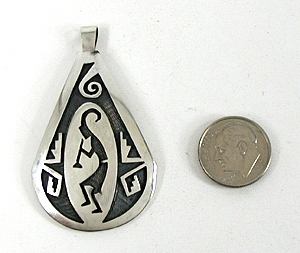
1/8" bail opening will accomodate a chain or cable.
| |||||||||
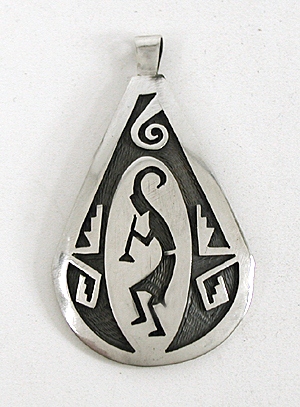
KokopelliThe kokopelli, flute player, often associated with the Hopi Flute Clan is the symbol of happiness, joy and fertility. Usually depicted as a non-gender figure, it was traditionally a male figure, often well endowed until the missionaries discouraged such depiction ! Kokopelli talks to the wind and the sky. His flute can be heard in the spring breeze, bringing warmth after the winter cold. He is the symbolic seed bringer and water sprinkler. His religious or supernatural power for fertility is meant to invoke rain as well as impregnate women both physically and mentally. The kokopelli image is found from Casa Grande, Mexico to the Hopi and Rio Grande Pueblos and then westward to the Californian deserts in prehistoric rock, effigy figures, pottery, and on kiva walls. |
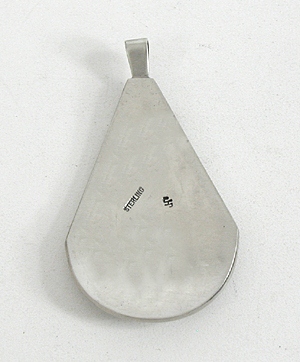
About Silver100% solid silver won't tarnish but it is too soft to use for making jewelry - it could easily be scratched, dented and bent. Sterling silver has a small amount of one or more other metals usually copper, added to the silver. To be called sterling silver, the alloy must contain at least 92.5% pure silver. Sterling silver alloy is harder than pure silver but the added metals also can cause discoloration or tarnish. |
What is Overlay?Native American overlay pieces are made of two layers of sterling silver. The bottom layer is a solid piece while the top layer has a cutout design. The cutout layer is placed over the bottom layer and the two pieces are "sweated" together, heated so that they become one solid piece of sterling silver. The bottom layer, or background, that shows through the cut out portion of the top layer is often darkened for contrast. Hopi silversmiths typically texture the background layer with hash marks while Navajo artists often leave the background smooth. Hopi artists tend to use geometric designs and symbols similar to those used in their pottery and baskets. Navajo silversmiths tend to create scenes depicting everyday life using people, animals, buildings and landscapes to tell a story - this style is called "overlay storyteller jewelry". Read more about overlay here. |