Horse Training, Horse Care, and Riding Books and Videos from Cherry Hill at www.horsekeeping.com  Home | About Us | Articles | Shopping | Contact | Site Map | Search

Mike Running Shield, Lakota
Ceremonial Peyote Staff

HK Item #LPS-01

Shopping  <   Ceremonial Items   <   Sticks

Authentic Native American Roadman Peyote Staff by Lakota Mike Running Shield

Authentic Native American Roadman Peyote Staff by Lakota Mike Running Shield

Authentic Native American Roadman Peyote Staff by Lakota Mike Running Shield

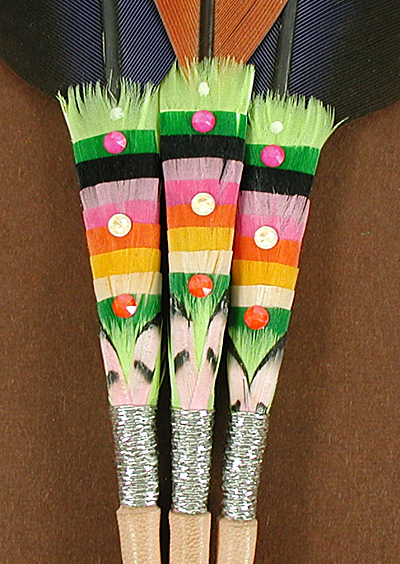
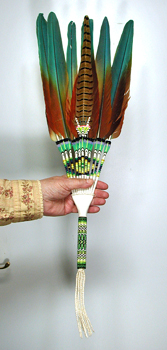
Dyed feathers and faceted beads on fan handle.

Authentic Native American Roadman Peyote Staff by Lakota Mike Running Shield

Authentic Native American Roadman Peyote Staff by Lakota Mike Running Shield

Macaw feather fan is 13" from base to tips.


Mike Running Shield, Lakota
Ceremonial Peyote Staff

LPS-01 - $1,600 plus s/h  
(ONLY ONE AVAILABLE)

Paula says - "In the Native American Church peyote ceremony, the peyote staff is held by the Roadman in an upright position to represent the Great Spirit. It is then passed around to each of the participants in the meeting."

size
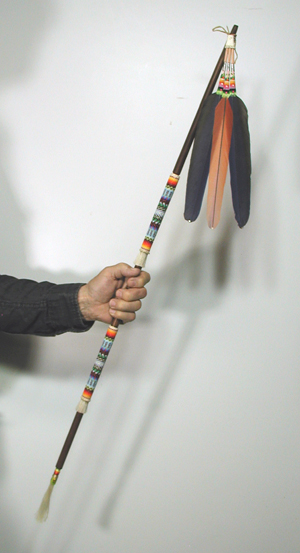
40 1/2" long;
fan 13" from base to tips
materials
wood, glass seed beads, Macaw feathers, horse hair, leather, brass
artist
Mike Running Shield, Lakota

Authentic Native American Roadman Peyote Staff by Lakota Mike Running Shield

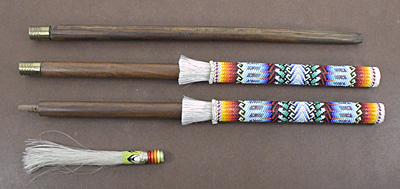
The staff separates into four sections for convenient transport between ceremonies. Three pieces screw together and the horse hair end piece is friction fit.

Authentic Native American Roadman Peyote Staff by Lakota Mike Running Shield

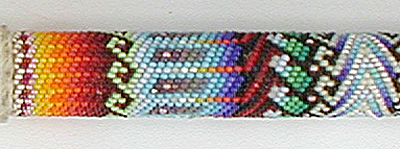
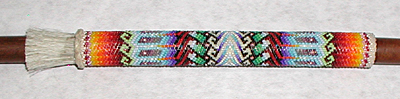
Identical beaded peyote stitch on two sections.

Authentic Native American Roadman Peyote Staff by Lakota Mike Running Shield

Authentic Native American Roadman Peyote Staff by Lakota Mike Running Shield

Dyed feathers and white horse hair on end piece.

Authentic Native American Peyote Rattle by Lakota Cleve Never Misses A Shot
Rattles
Authentic Native American Ceremonial Peyote Fan by Lakota artisan Lester Black Horse
Ceremonial Peyote Fan

Peyote Stitch

The peyote stitch, also known as the gourd stitch, is an off-loom bead weaving technique that creates a tightly woven, colorful covering around cylindrical objects such as staffs, sticks and rattle handles. It involves weaving beads in a zig-zag or staggered pattern, where each new bead is sewn between beads of the previous row, creating an offset, textured surface that resembles the segmented appearance of the peyote cactus, from which the stitch gets its name. Peyote stitch pieces can be woven as flat strips, in a flat round shape, or as a tube. The colors and designs are often used to represent personal or tribal identity, tell stories, or convey symbolic messages. Each pattern can be unique to a particular tribe, family, or individual, with motifs reflecting cultural heritage, spiritual beliefs, or important life events.

Native American Ceremonial Sticks
©  2010 Horsekeeping LLC   © Copyright Information
There are many types of sticks used in Native American ceremonies.

A peyote staff is a wooden stick decorated with beads, feathers, leather and other adornments that is typically used in Native American Church ceremonies by the Roadman, the person who leads peyote ceremonies. The intricate beadwork on peyote staffs and sticks encodes stories, prayers, and tribal motifs, making each stick a unique artifact of cultural heritage and spiritual intent.

A peyote stick is smaller than a peyote staff and decorated in a similar fashion It is used for personal ritual purposes such as prayer, singing and drumming.

Lakota Horse Stick is usually made of wood and decorated with paint, leather, fur, feathers, beads and other items. To the Lakota and other Plains Indians, the horse was a working partner that provided transportation when moving, and a heroic companion on hunts and raids and in battle. When a warrior lost a horse, he would honor the horse by making a horse stick. The effigy would represent the likeness of the horse and be decorated with markings and adornments that recounted the life and achievements of the horse. The horse stick would then be carried by the warrior in dances to pay tribute to the great horse before other tribal members, most notably those of the Horse Society. By making and carrying the stick, it was hoped that the spirit of the horse would follow the warrior in life and give him added strength and power.

A hatcamuni is an Acoma Pueblo prayer stick. It is made by the individual (or an individual's family member) that is requesting healing. It is cut from a live willow or cedar, may be notched or painted and might have feathers attached to it.

The hai detoi is a stick of madrona wood with feathers on one end and a flint on the other - it is used by a Pomo (Northern California) shaman during healing ceremonies.

The Zuni bundle up a group of prayer sticks, kaetcine, offer them up to the spirits and then bury or deposit them in a prescribed location.

Home | FAQ | About Us | Articles | Shopping | Contact | Site Map | Search

©  2025 Horsekeeping LLC    © Copyright Information