Native
American Ceremonial Sticks
©
2010 Horsekeeping LLC ©
Copyright Information
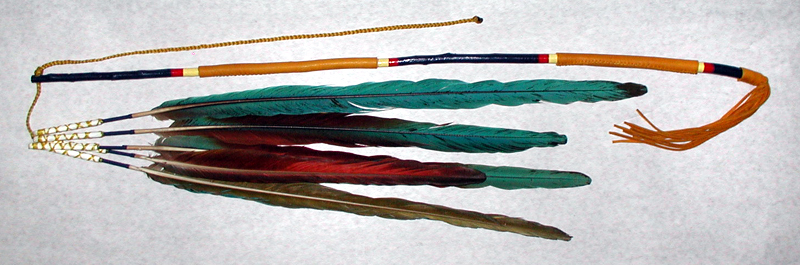
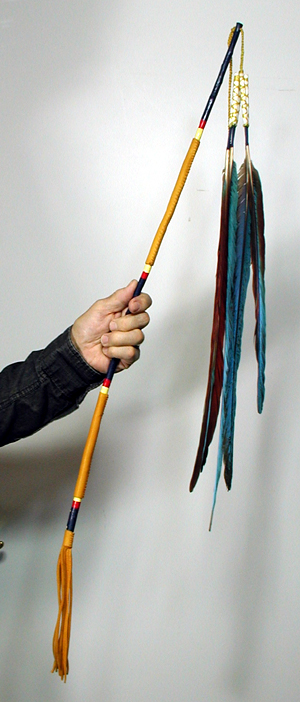
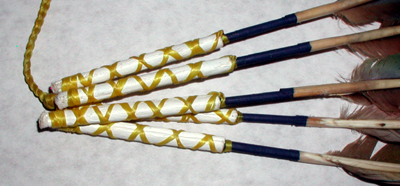
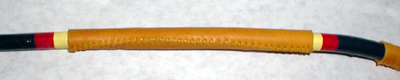
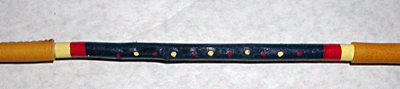
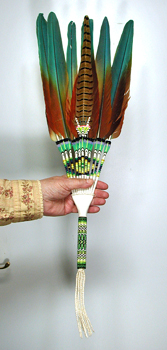
There are many types of sticks used in Native American ceremonies. A
peyote staff is a wooden stick decorated with beads, feathers, leather
and other adornments that is typically used in Native American Church ceremonies
by the Roadman, the person who leads peyote ceremonies. The intricate beadwork
on peyote staffs and sticks encodes stories, prayers, and tribal motifs, making
each staff a unique artifact of cultural heritage and spiritual intent. A
peyote staff is smaller than a peyote staff and decorated in a similar
fashion It is used for personal ritual purposes such as prayer, singing and drumming. Lakota
Horse Stick is usually made of wood and decorated with paint, leather, fur,
feathers, beads and other items. To the Lakota and
other Plains Indians, the horse was a working partner that provided transportation
when moving, and a heroic companion on hunts and raids and in battle. When
a warrior lost a horse, he would honor the horse by making a horse stick. The
effigy would represent the likeness of the horse and be decorated with markings
and adornments that recounted the life and achievements of the horse. The
horse stick would then be carried by the warrior in dances to pay tribute to the
great horse before other tribal members, most notably those of the Horse Society.
By making and carrying the stick, it was hoped that the spirit of the horse would
follow the warrior in life and give him added strength and power. A
hatcamuni is an Acoma Pueblo prayer stick. It is made by the individual
(or an individual's family member) that is requesting healing. It is cut from
a live willow or cedar, may be notched or painted and might have feathers attached
to it. The hai detoi
is a stick of madrona wood with feathers on one end and a flint on the other -
it is used by a Pomo (Northern California) shaman during healing ceremonies. The
Zuni bundle up a group of prayer sticks, kaetcine, offer them up to the
spirits and then bury or deposit them in a prescribed location. |  Home
| About Us
| Articles |
Shopping | Contact
| Site
Map | Search
Home
| About Us
| Articles |
Shopping | Contact
| Site
Map | Search